
How to hire a tattoo artist for your event — the complete guide
Educational guide in checklist format. Questions to ask before booking. What insurance should the artist carry. Permit requirements by state. How to vet flash sheet quality. Timeline for booking. High trust signal, top-of-funnel capture.
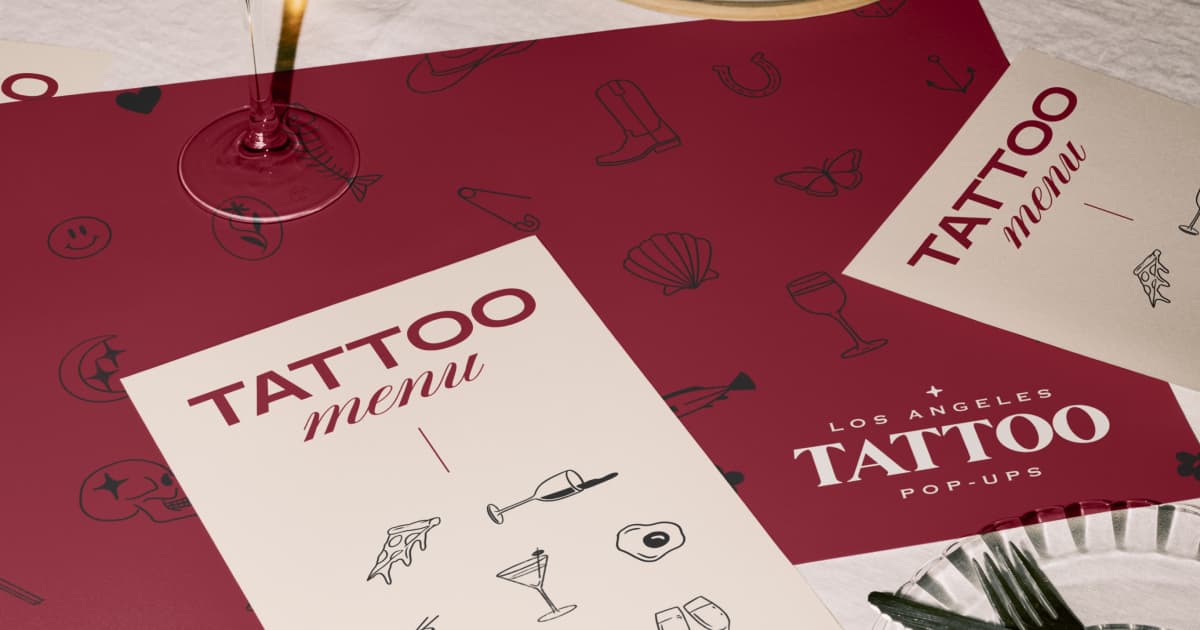
The event tattoo artist hiring checklist
Not every event tattoo service is built the same. A real popup is a fully staffed activation with insurance, permits, custom flash, and an experienced crew. A solo artist with a portable kit is something else. This checklist covers what to look for, what to ask, and what separates a professional operation from a weekend freelancer.
- Verify insurance ($1M+ liability minimum, ask for COI). A real event tattoo company carries at least $1M in professional liability insurance — and they can produce a certificate of insurance (COI) within 24 hours. Most venues require the COI before they allow a tattoo station on site. If the artist hesitates or says "I have insurance, don't worry," that's a no. Ask for the COI, ask to be named as additional insured, and confirm the policy covers temporary body art at your specific venue type.
- Check permits (county health permit for temporary body art facility). Most counties require a temporary body art facility permit for any event where tattooing happens. The artist should know this without being told. They should handle the permit filing themselves — not ask you to do it. Permit requirements vary by state and county: California requires a county health permit and a fire marshal sign-off. Nevada requires a Clark County permit. New York City has its own Department of Health permitting process. Florida is county-by-county. A professional event tattoo company knows the requirements in every market they serve.
- Review portfolio (event tattoos, not just studio work). There is a gap between tattooing in a studio and tattooing at an event. Studio artists work one-on-one with a seated client in perfect lighting with unlimited time. Event artists work standing, in variable lighting, with a line of guests, at high volume. The portfolio should show event tattoos — flash-sized pieces applied at actual events, not just full-sleeve studio work. If every portfolio photo is a large custom piece in a studio chair, that artist may not be event-tested.
- Ask about crew size (solo vs. full crew matters for events). One artist can tattoo 1–1.5 guests per hour. A 4-person crew (artist, assistant, check-in host, coordinator) can sustain 3–5 per hour. For a 50-guest event, a solo artist will tattoo 8–12 guests in 4 hours. A full crew will tattoo 30–40. The crew size determines the guest experience. Ask directly: "How many people are on site running the station?" If the answer is "just me," adjust your expectations (and your guest count).
- Request flash samples (custom vs. generic, quality of design). Event flash is different from studio flash. Event pieces are smaller (2–4 inches), faster to tattoo (15–30 minutes), and designed to appeal to a broad audience. Ask to see past event flash sheets. Are they custom-designed for each event, or generic clipart? Is the design quality consistent? Does the flash tell a story about the event? A good event flash sheet reflects the brand, the theme, or the vibe of the event — it doesn't look like a page from a Pinterest board.
- Read reviews (event-specific reviews, not just studio reviews). A studio artist might have 200 five-star reviews from individual clients. An event company should have reviews from event planners, brand managers, hotel event directors, and wedding couples. Look for reviews that mention: "they handled the line well," "the venue loved them," "seamless integration with the event flow," "great with guests," "professional from setup to breakdown." If all the reviews say "great tattoo, clean shop," that artist hasn't been event-tested.
- Confirm setup requirements (space, power, timing). Every venue is different. Some provide a dedicated room, some want the station in a corner of the main space, some require a separate tent. The artist should have a standard setup list and be flexible about placement. Ask: What space do you need? Do you need access to power? How long does setup take? Do you need a sink or hand-washing station? Professional event tattoo companies bring their own everything — chairs, lights, sanitation station, waste disposal — and they arrive 2 hours before guests to set up.
- Ask about backup plans (if an artist gets sick). What happens if the assigned artist calls in sick on event day? A solo artist has no backup. A real company has a bench — a roster of trained, vetted artists who can step in. Ask: "What's your contingency plan if an artist can't make it?" The right answer is: "We have 3–4 backup artists on standby for every event."
- Get it in writing (contract with scope, timeline, cancellation policy). Professional event companies provide a contract. It should include: the date and location, the crew size, the hours of operation, the scope (number of flash designs, number of artists, add-ons), the payment schedule (deposit, balance), the cancellation policy, the insurance requirements, the permit responsibilities, and the post-event support (touch-ups, aftercare). If there's no contract, there's no accountability.
- Check references (ask for past event client contacts). Any company that has done real events can provide references. Ask for event planners, brand managers, or hotel event directors who have worked with them. Call them. Ask: Was the crew professional? Did they show up on time? Did they handle the line well? Did the venue have any complaints? Would you book them again? If the artist can't produce references, they haven't done this before.
Red flags to watch for
- No insurance or can't produce a COI. If they can't show you a certificate of insurance, your venue will likely reject them — and you're exposed to liability.
- No permit knowledge. If they don't know county health permit requirements for temporary body art facilities, they haven't worked events professionally.
- Only does walk-in studio work, no event experience. Studio work and event work are different skills. Studio artists untested at events won't handle volume, lighting, or guest flow.
- Solo artist claiming to handle 100+ guest events. One artist can do 8–12 tattoos in a 4-hour event. For 100+ guests, you need 2–3 artists plus support staff. Anyone claiming otherwise is overpromising.
- Generic flash sheets. If the flash looks like clipart or the same sheet they show every client, you're not getting a custom experience. Event flash should be designed around your event, brand, or theme.
- No contract. No contract means no scope, no cancellation policy, no accountability. Walk away.
- Requests cash payment. Professional companies invoice and accept credit cards, ACH, or wire transfers. Cash-only is a red flag for tax evasion and lack of business infrastructure.
- Can't provide references. If they've done real events, they have past clients who will vouch for them. No references means no track record.
- Vague about timeline. A professional gives you a clear timeline: when the deposit is due, when flash design starts, when the COI arrives, when they show up, when they break down. Vague answers mean they're figuring it out as they go.
- Doesn't mention aftercare. Aftercare is part of the service. If they don't mention aftercare instructions, aftercare cards, or touch-up policies, they're not thinking about what happens after the event.
When to book — the event tattoo timeline
- 8–12 weeks out: Start research. Book initial discovery calls with 2–3 companies. Ask about availability for your date. Most established event tattoo companies book 4–6 months out for peak season (May–October). If your date is flexible, you have more options.
- 6–8 weeks out: Lock in your date. Sign the contract. Pay the deposit (typically 50%). The best companies are booked first, so don't wait.
- 4–6 weeks out: Flash sheet design begins. You should receive initial concepts, request revisions, and approve the final design. This is also when venue paperwork starts — the company should send the COI and handle any permit applications.
- 2–4 weeks out: Approve final flash. Confirm logistics: arrival time, setup location, power access, parking, load-in route. The COI should be delivered to the venue. The guest info sheet should be ready (preview designs, aftercare preview, waiver link).
- 1 week out: Final guest count. The company confirms crew size based on the expected number of guests. Venue coordination call between the event planner and the tattoo company's coordinator.
- Event day: The crew arrives 2 hours before guests. Station setup, sanitation stations, check-in system tested. Activation runs. Breakdown happens after the last guest — the venue doesn't touch a thing.
- Post-event: Aftercare follow-up. Every guest who was tattooed receives aftercare instructions. The company follows up at 30 days. Touch-ups are handled at partner studios if needed.
Tattoo Popups vs. solo tattoo artist
You'll find both in this market. Here's what you actually get with each.
| Tattoo Popups | Solo tattoo artist | |
|---|---|---|
| Crew size | 4 people per station (artist, assistant, host, coordinator) | 1 person |
| Tattoos per hour | 3–5 per artist, sustained | 1–1.5 per hour |
| Insurance | $2M occurrence / $4M aggregate, COI on request | Often none — your venue won't accept it |
| Permits | We file the county health permit, the fire marshal sign-off, and the venue paperwork | You handle it (or they do, slowly) |
| Flash sheet | Custom, designed for your event | Generic sheet, or guest brings their own (slower) |
| Guest experience | Digital check-in, no line, aftercare included | Paper waivers, queue, no aftercare |
| Best for | Weddings, brand activations, private parties, hotel programming, festivals, corporate events | Small private sessions (1–5 guests, no event) |
If you have 5 close friends and a backyard in Carpinteria, a solo artist might beperfect. If you have 40+ guests, a wedding, a brand, or a hotel, a popup is the only model that holds up.
Related pages
- How It Works — the full process from inquiry to recap
- Why Choose Us — what makes us different from solo artists
- Safety & Compliance — our permits, insurance, and artist credentials
- Live Tattoo Artist for Events — the core service
- Corporate Event Tattoo Artist — brand and corporate activations
- Brand Activation Tattoo Station — sponsored event tattooing
- Wedding Tattoo Artist for Guests — wedding-specific service
- Brand Activations — full brand activation service page
- Festival Tattoo Popups — festival-specific service
- Wedding Tattoo Popups — wedding service page
- Private Celebration Tattoos — private party service
- Hotel & Hospitality Tattoos — hotel programming service
- Los Angeles Event Tattoo Artist
- San Diego Event Tattoo Artist
- Orange County Event Tattoo Artist
- San Francisco Event Tattoo Artist
- New York City Event Tattoo Artist
- Miami Event Tattoo Artist
- Las Vegas Event Tattoo Artist
Tattoo Popups — Live tattoo artist service for events, weddings, brand activations, private parties, hotel programming, corporate events, and festivals. Serving Santa Barbara, Montecito, Ojai, and the California Central Coast. Custom flash, licensed event-specialized artists, full 4-person crew, $2M liability insurance, every permit handled, 30-day touch-up guarantee.
Phone: +1 (323) 400-0803 • Email: hello@tattoopopups.com • Book: cal.com/tattoopopups/30min
Ready to make your event unforgettable?
We'll customize everything — from the art to the crew size to the setup. No cookie-cutter packages. Tell us about your event and we'll take it from there.